Skip to content

A new concrete driveway in Cary, NC typically costs between $8 and $12 per square foot installed for a standard residential project. For a two-car driveway measuring 20 by 40 feet, the estimated cost is between $6,400 and $9,600. Smaller driveways may cost less, while decorative finishes, additional grading, drainage work, and thicker concrete can increase the total.
If you’re researching the concrete driveway cost for your home, knowing the average price is only part of the picture. Your property’s condition, the amount of preparation required, and the type of concrete you choose all affect the final estimate.
Cary homeowners also need to consider local conditions. Clay-heavy Piedmont soils, changing moisture levels, summer heat, and drainage issues can all influence how a driveway should be prepared and installed.
This guide breaks down the cost of a concrete driveway, explains your options, and covers what to consider before hiring a contractor. You’ll also learn why proper preparation matters and how to compare estimates so you can confidently choose your project. Let’s take a closer look now at what is involved with installing concrete driveways in Cary, NC.
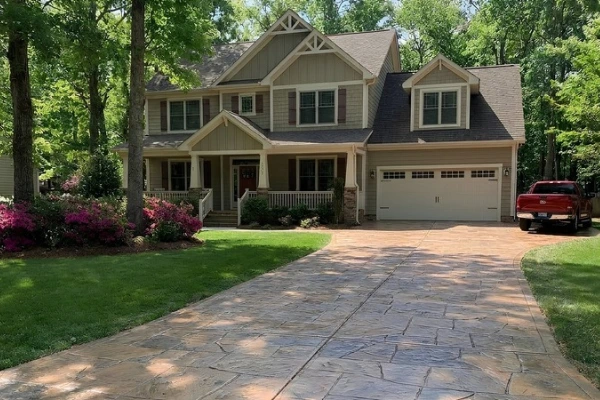
What Affects the Cost of a Concrete Driveway?
No two driveway installations are exactly alike, so establishing a concrete driveway cost estimate can be tricky. Even two properties with similar-sized driveways can have different project costs depending on access, grading, existing materials, and the finish selected. Here are the main factors that influence the cost to pour a concrete driveway in Cary.
Concrete Materials and Mix Design
Concrete is sold by the cubic yard, and the amount required depends on the driveway’s overall square footage and slab thickness.
A typical residential driveway uses a concrete mix designed to handle everyday vehicle traffic. A 4,000 PSI mix is common, but the right strength and mix design depend on intended use, site conditions, and contractor recommendations.
For example, a 20-by-40-foot driveway has 800 square feet of surface area. At four inches thick, it requires approximately 10 cubic yards of concrete, allowing for a reasonable amount of extra material.
Thicker slabs, heavier vehicle loads, and certain site conditions may require additional concrete or a different mix specification. These decisions affect material costs, so your estimate should specify the mix and thickness included.
Labor, Forming, and Finishing
Labor is another major part of your concrete driveway installation cost. Before pouring concrete, the crew must establish the driveway’s dimensions, install forms, prepare the base, and position any specified reinforcement. Once the concrete arrives, the crew has a limited window to place, level, and finish the surface properly.
Design complexity also affects labor requirements. A straightforward rectangular driveway with a broom finish generally requires less work than a curved driveway, a multi-level entrance, or a stamped concrete design.
Experienced installers understand how to work with changing temperatures and weather conditions, which is particularly important during North Carolina summers. Proper timing, finishing techniques, and curing practices all contribute to the quality of the finished driveway.
Site Preparation and Grading
The ground underneath your driveway is just as important as the concrete itself. Before installation, you may need to excavate, level, compact, or replace the existing surface with suitable base material. If the property has a slope, soft soil, poor drainage, or a damaged driveway, you may need additional preparation.
Depending on your property’s condition, site preparation can add about $500 to $2,000 or more to the project. This is one area where choosing a contractor based solely on the lowest estimate can cost you more. Cutting corners on excavation, grading, or compaction can leave the finished driveway vulnerable to settling, uneven surfaces, and premature cracking.
Reinforcement and Concrete Thickness
Driveway thickness and reinforcement should reflect how the surface will be used. A four-inch slab is common for many residential applications, but heavier vehicles, frequent deliveries, and specific site conditions may call for a thicker installation.
Depending on the project, contractors may recommend wire mesh, reinforcing steel, or fiber reinforcement. These options serve different purposes and should be selected based on the driveway design and expected loads.
Ask your contractor to explain the proposed thickness and reinforcement rather than assuming every concrete driveway uses the same specifications.

Concrete Driveway Cost by Size
One of the easiest ways to estimate your project budget is to calculate the driveway’s square footage.
The following examples use an estimated installed price of $8 to $12 per square foot for a standard broom-finish driveway. Actual quotes will depend on site preparation, access, materials, and other project requirements.
| Driveway Size | Square Footage | Estimated Cost |
| 10 x 20 feet | 200 sq. ft. | 1,600–2,400 |
| 10 x 30 feet | 300 sq. ft. | 2,400–3,600 |
| 20 x 20 feet | 400 sq. ft. | 3,200–4,800 |
| 20 x 30 feet | 600 sq. ft. | 4,800–7,200 |
| 20 x 40 feet | 800 sq. ft. | 6,400–9,600 |
| 25 x 40 feet | 1,000 sq. ft. | 8,000–12,000 |
These figures are planning estimates, not guaranteed installation prices. Smaller projects may also have minimum mobilization and setup charges that increase the cost per square foot.
Single-Car and Compact Driveways
A single-car driveway measuring 10 by 20 feet provides approximately 200 square feet of parking space. At the estimated standard installation rate, the project would cost around $1,600 to $2,400.
A longer 10-by-30-foot driveway provides additional parking or access space and would typically fall between $2,400 and $3,600. These configurations are common where properties have narrower frontages or limited parking areas.
Standard Two-Car Driveways
Two-car driveways are among the most common residential configurations.A 20-by-20-foot driveway provides 400 square feet of surface area, while a 20-by-40-foot driveway provides 800 square feet.
Depending on the preparation and finish you choose, homeowners can use the estimates above to set an initial budget. If you need extra space for turning, parking, or garage access, consider expanding the driveway during the original installation.
Larger Driveways and Circular Approaches
Larger properties may require extended driveways, additional parking areas, or circular approaches.
For example, a 1,000-square-foot driveway could cost approximately $8,000 to $12,000 with a standard finish. Larger projects may have different per-square-foot pricing depending on access, equipment requirements, and how efficiently the concrete can be delivered and poured.
Curved edges, additional forming, and drainage considerations can also affect the final price. It is a popular upgrade option for concrete driveways in Cary, NC.

Decorative Concrete Options and Their Costs
A standard broom-finish driveway is practical, durable, and relatively straightforward to maintain. However, it isn’t the only option. Decorative concrete can give your driveway a more customized appearance and help it complement your home’s exterior.
Stamped Concrete Driveways
Stamped concrete uses specially designed mats to create patterns that resemble natural stone, brick, slate, or other materials. The concrete is textured while it is still workable, and you can incorporate color to create a more detailed appearance.
In the Cary area, stamped concrete driveway estimates may range from approximately $12 to $18 per square foot, depending on the pattern, color choices, borders, and project complexity. Stamped concrete is worth considering if you want a more decorative entrance without installing individual pavers or natural stone.
Exposed Aggregate and Decorative Finishes
Exposed aggregate reveals the natural stones within the concrete mix, creating a textured finish with a distinctive appearance. This option can provide additional visual interest and surface texture. Its final appearance depends on the aggregate selected and the finishing process.
Decorative scoring is another option. This involves cutting lines into the concrete to create geometric patterns or the appearance of individual sections. These finishes add design flexibility, although they require additional labor and may increase the overall project cost.
Concrete Sealing
Sealing helps protect the concrete surface against moisture penetration, staining, and everyday wear. Depending on the sealer and application requirements, professional driveway sealing may cost approximately $0.50 to $1.50 per square foot.
New concrete needs time to cure before applying a sealer. The appropriate waiting period depends on the product and installation conditions, so follow the manufacturer’s instructions and your contractor’s recommendations.
Sealing is a maintenance consideration, not a substitute for proper installation. Even a well-maintained driveway can develop cracks over time, but good maintenance helps preserve its appearance and surface condition.
Concrete vs. Asphalt: Which Driveway Costs Less in Cary?
If you’re comparing driveway materials, asphalt and concrete are two common choices. Asphalt generally has a lower initial installation cost, with estimates often ranging from $3 to $5 per square foot. Concrete typically costs more upfront but offers different maintenance requirements and a longer potential service life.
| Comparison | Concrete | Asphalt |
| Initial cost | Higher | Lower |
| Appearance | Multiple finishes and decorative options | Traditional dark surface |
| Maintenance | Periodic cleaning and maintenance | Periodic sealing and repairs |
| Heat performance | Generally holds its shape in hot weather | Can soften in high temperatures |
| Typical lifespan | Approximately 30–50 years with proper installation and care | Often approximately 15–20 years, depending on conditions and maintenance |
Long-Term Maintenance and Value
Asphalt typically requires periodic sealing and may need resurfacing as it ages. Concrete generally requires less routine maintenance, although sealing, cleaning, and occasional repairs may still be necessary.
When comparing the cost of a concrete driveway with asphalt, consider more than the original installation price. Think about how long you expect to stay in your home, how much maintenance you’re comfortable handling, and what appearance you prefer.
Concrete may be a worthwhile investment if you want a longer-lasting surface with more options for customizing the appearance.
Appearance and Curb Appeal
Your driveway is one of the first things people see when approaching your home. A clean, well-maintained concrete driveway can complement your landscaping, exterior finishes, and overall property design. Decorative concrete can provide an even more customized appearance.
While no driveway material guarantees a specific increase in resale value, maintaining an attractive, functional entrance can improve your property’s overall impression.

Local Factors That Affect Concrete Driveway Installation in Cary, NC
Choosing the right materials is important, but local property conditions deserve just as much attention. Cary and the surrounding Triangle area have environmental and soil conditions that can influence driveway installation and long-term performance.
Clay Soil and Ground Preparation
Much of the Piedmont region around Cary contains clay-rich soils. Clay can expand when it absorbs moisture and shrink as it dries, creating movement beneath a concrete slab.
That movement can contribute to cracking or uneven settling when the driveway lacks a properly prepared, stable base.
A professional installation should begin with an assessment of the existing ground conditions. Depending on what the contractor finds, excavation, additional base material, and mechanical compaction may be necessary.
Drainage and Water Management
Water management is another important consideration for Cary properties. A driveway needs to direct water away from the home and prevent unnecessary pooling around or underneath the slab. Poor grading can allow water to collect near the driveway, erode supporting soil, or create problems around nearby landscaping and structures.
Depending on the property, the installation may require adjusted grading, drainage channels, or other water-management measures. Addressing these concerns before pouring concrete is generally easier and less expensive than dealing with drainage-related damage afterward.
Weather and Seasonal Conditions
North Carolina’s climate brings hot, humid summers, periods of heavy rainfall, and occasional winter freezes. These conditions influence concrete placement, finishing, and curing. Hot weather can accelerate moisture loss and setting, while rain during installation can interfere with finishing and surface quality.
A knowledgeable contractor will consider the weather forecast, site conditions, and appropriate curing practices when scheduling the work.
Driveway Permits and Local Requirements
Permit requirements depend on where the driveway work takes place and how it connects to public streets.
The Town of Cary requires a driveway connection permit for new construction, modifications, or replacement of driveways connecting to Town-maintained streets. Work involving public sidewalks, curbs, or rights-of-way may also require approval.
Properties connecting to state-maintained roads may have additional NCDOT requirements. Not every driveway project has the same permitting requirements, so homeowners should confirm what applies to their property before work begins. A qualified contractor can help identify potential requirements and explain which approvals need to be addressed.


Residential and Commercial Concrete Driveway Projects
Concrete installation isn’t limited to residential driveways. Businesses and commercial property owners also rely on properly constructed concrete surfaces for vehicle access, parking, and pedestrian areas.
The requirements for these projects can differ considerably.
Residential Concrete Driveways
For homeowners, the priorities are generally convenient access, adequate parking, curb appeal, and long-term durability. A residential installation may include:
- New single-car or two-car driveways
- Replacement of cracked or deteriorating concrete
- Driveway extensions and additional parking areas
- Decorative or stamped concrete finishes
- Garage approaches and entry aprons
- Walkways connecting driveways to entrances
The right design should fit the property, accommodate the vehicles using the driveway, and account for drainage and landscaping.
Explore our Residential Concrete services.
Commercial Concrete Applications
Commercial projects often involve heavier traffic, larger paved areas, and additional design considerations. Depending on the contractor’s services and project scope, applications may include parking areas, access lanes, loading zones, sidewalks, and concrete approaches.
Commercial installations may require thicker slabs, different reinforcement, engineered specifications, and coordination with site drainage and accessibility requirements. If you’re planning a commercial concrete project, make sure your estimate addresses the intended traffic loads, site conditions, and any applicable plans or approvals.
Explore our Commercial Concrete Services

How to Choose a Concrete Driveway Contractor in Cary
The contractor you choose can significantly affect how your driveway looks and performs over time. A low estimate may seem attractive, but it doesn’t tell you whether the contractor has accounted for proper preparation, materials, reinforcement, and finishing.
Before committing to a project, compare the scope of work as carefully as the price. Local concrete experts can discuss every aspect of your project in detail before any work begins.
What a Complete Concrete Driveway Quote Should Include
A detailed estimate should clearly explain:
- Project dimensions: The total square footage and driveway layout.
- Concrete specifications: The proposed mix design and PSI rating.
- Slab thickness: The planned depth and any areas requiring additional thickness.
- Base preparation: Excavation, grading, gravel, and compaction requirements.
- Reinforcement: Whether mesh, rebar, or fiber reinforcement is included.
- Finishing: The selected surface texture, color, or decorative treatment.
- Drainage: Any grading adjustments or drainage improvements.
- Cleanup: Removal of existing materials and disposal of construction debris.
- Payment terms: Deposit requirements, payment schedule, and project expectations.
If something isn’t included, ask whether it will be an additional charge.
Questions to Ask Before Hiring an Installer
Before choosing a contractor, ask:
- How much experience do you have installing concrete driveways in the Cary area?
- What concrete mix and slab thickness do you recommend for my property?
- How will you prepare and compact the ground?
- What reinforcement will the project require?
- How will you address drainage and water runoff?
- Are permits or approvals required for this particular installation?
- What is included in the written estimate, and what could increase the cost?
You should also verify applicable licensing, insurance, references, and examples of completed work.
Be cautious of unusually low estimates, vague material specifications, or contractors who request full payment before work begins.

Why Choose a Local Concrete Contractor in Cary?
Hiring a contractor familiar with Cary and the surrounding Triangle communities offers more than convenience.
Local experience means understanding the conditions that commonly affect projects in the area, from clay-heavy soil and drainage concerns to neighborhood access and local driveway requirements. A contractor who takes the time to assess your property can recommend an installation approach based on what your driveway actually needs rather than relying on a one-size-fits-all solution.
At Cary Concrete Contractor, our focus is on helping homeowners understand their options and make informed decisions about their concrete projects. We consider the property’s condition, the intended use of the driveway, and the preparation required before recommending an installation approach.
We believe a good driveway starts below the surface. Proper preparation, appropriate materials, careful finishing, and attention to drainage all contribute to a better finished result. Whether you’re replacing an existing driveway or planning a new installation, we’re here to help you understand the process and your options.
Ready to find out how much a concrete driveway will cost for your Cary property? Contact Cary Concrete to request a free estimate. We’ll discuss your project, assess your needs, and provide pricing based on the work involved. We can show you how easy concrete driveways in Cary, NC can be.
Frequently Asked Questions About Concrete Driveway Costs
How much does a 1,000-square-foot concrete driveway cost?
A 1,000-square-foot concrete driveway in Cary typically costs approximately $8,000 to $12,000 with a standard finish. Additional grading, drainage work, thicker concrete, and decorative finishes can increase the total.
How much does a 20×20 concrete driveway cost?
A 20-by-20-foot driveway covers 400 square feet. Using an estimated installation rate of $8 to $12 per square foot, the project would cost approximately $3,200 to $4,800. Site preparation and finish choices will affect the final estimate.
How much does a 30-foot concrete driveway cost?
The price depends on the driveway’s width. A 10-by-30-foot driveway covers 300 square feet and may cost $2,400 to $3,600. A 20-by-30-foot driveway covers 600 square feet and may cost $4,800 to $7,200.
Is concrete cheaper than asphalt for a driveway?
Asphalt generally costs less upfront, with estimated installation prices of $3 to $5 per square foot compared with approximately $8 to $12 for standard concrete. However, concrete generally requires less routine maintenance and can last longer when properly installed.
How long does a concrete driveway last in North Carolina?
A properly installed and maintained concrete driveway can last approximately 30 to 50 years under normal residential conditions. Soil preparation, drainage, concrete quality, installation practices, and maintenance all influence its lifespan.
How thick should a residential concrete driveway be?
Four inches is a common thickness for standard residential driveways. However, heavier vehicles, site conditions, and intended use may require a thicker slab. Your contractor should recommend an appropriate thickness for your project.
Does a concrete driveway need reinforcement?
Reinforcement may be recommended depending on the driveway’s design, expected vehicle loads, and site conditions. Options include wire mesh, reinforcing steel, and fiber reinforcement. Reinforcement does not eliminate cracking, but it can help control crack behavior when properly specified and installed.
Do I need a permit to replace my driveway in Cary, NC?
Some driveway projects require permits, particularly when the work connects to a Town-maintained street or involves a public right-of-way, sidewalk, or curb. Requirements depend on the property’s location and project scope. Check with the Town of Cary before beginning work.